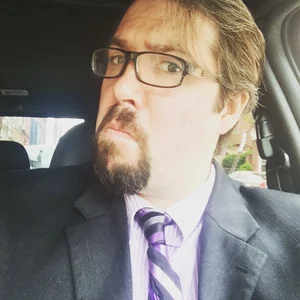
Fishing Without Bait 529: A Reintroduction to Fishing Without Bait
There Is No There: Learning to Live by Moments
What are you working so hard to get to?
That's one of the questions Producer Mike brings into Episode 529 of Fishing Without Bait. Jim Ellermeyer's answer cuts through a lot of the noise:
“There is no there.”
It's a deceptively simple idea that gets to the heart of what Fishing Without Bait has been exploring for more than 500 episodes.
Expectations Versus Intentions
Jim describes one of the guiding principles of the show this way:
“The greater your expectations, the lower your serenity. The lower your expectations, the greater your serenity.”
That doesn't mean abandoning goals, responsibilities, or ambition.
Jim and Mike aren't suggesting that everyone wander through the woods, pet squirrels, and stop caring about outcomes. Instead, they're talking about the difference between an expectation and an intention.
When we demand one definitive outcome, we create a very narrow definition of success. If life doesn't cooperate, we've already decided we've failed.
An intention gives us direction without demanding that reality follow our script.
We can decide how we want to show up. We can put action and effort behind that decision. What we cannot do is control everything that happens after that.
What Are You Working So Hard to Get To?
The pressure to constantly accomplish more can create what Jim describes as a “myth of productivity.”
Finish this task. Reach that milestone. Get the next thing. Then we'll finally arrive.
But where?
Mike asks himself, “What am I working so hard to get to?”
It's a useful question because many of us spend so much time trying to reach some imaginary destination that we miss the life happening while we're getting there.
There is no finish line where everything suddenly becomes complete.
There is only what we're doing with the moment we're experiencing now.
Emotional Honesty Takes Practice
Mindfulness also requires honesty.
Not the automatic “I'm good” we give someone when they ask how we're doing, but the willingness to identify what we're actually experiencing.
Jim puts it plainly:
“When we're sad, feel sad. When we're angry, address it.”
Pretending everything is fine isn't emotional regulation. Sometimes it's avoidance.
Jim and Mike even apply this to conversations with medical providers. If something is wrong, withholding information because it's embarrassing makes it harder for someone to help.
The same principle applies to recovery, relationships, fear, resentment, and mental health.
As Jim notes from the 12-step tradition, “it's our secrets that keep us sick.”
Honesty can be uncomfortable. But continually postponing that discomfort doesn't remove it. It simply means we're carrying it longer.
Pause Before You React
Another practical part of mindfulness is developing space between what happens and what we do next.
Before speaking or reacting, Jim recommends letting words pass through three gates:
Is it true?
Is it kind?
Is it necessary?
That pause can transform communication.
Instead of making choices from assumptions, anger, fear, or impulse, we give ourselves enough space to respond thoughtfully.
That's mindfulness outside of a meditation room.
It's mindfulness at work.
It's mindfulness with family.
It's mindfulness during a disagreement.
It's mindfulness when you're tempted to say something you'll regret five minutes later.
Paying Attention on Purpose
Jim offers one of the simplest definitions of mindfulness in the episode:
“It's paying attention on purpose.”
We're surrounded by internal chatter, distractions, expectations, worries, memories, and imagined futures. We can become so absorbed by them that, as Jim says, we might not recognize creation if it were happening five feet away.
So the invitation is simple:
Wake up.
Look around.
Be here.
We Live by Moments
Near the end of Episode 529, Jim and Mike return to the Buddhist concept of impermanence.
People, places, possessions, relationships, and circumstances don't remain unchanged forever. The moment we encounter something, eventually there will also be a moment of parting.
That can sound depressing.
It can also make what we have right now much more valuable.
Jim closes the thought beautifully:
“We don't live by years. We don't live by months. We don't live by weeks, we don't live by days, we don't live by hours. We live by moments.”
The question isn't whether we can control how many moments we're given.
The question is what we choose to do with this one.
Continue Fishing Without Bait
Subscribe to Fishing Without Bait in your favorite podcast player for more conversations about mindfulness, recovery, wellness, spirituality, relationships, and creating a meaningful life.
Get ad-free episodes and support the continued production of the show through Patreon:
https://www.patreon.com/c/fishingwithoutbait
Continue the practice with “Learn to Fish Without Bait: A 365-Day Mindfulness Journal and Adult Coloring Book”:
https://www.lulu.com/shop/james-ellermeyer-lpc-ma-ncc-lpc/learn-to-fish-without-bait/paperback/product-6n9rd8.html?page=1&pageSize=4